Add DNS records · DigitalOcean
If your domain's DNS is hosted at DigitalOcean, use this page to publish the DKIM, return-path, tracking, and DMARC records Bird provides. Bird does not require an SPF record at the domain apex; see DKIM, SPF & DMARC.
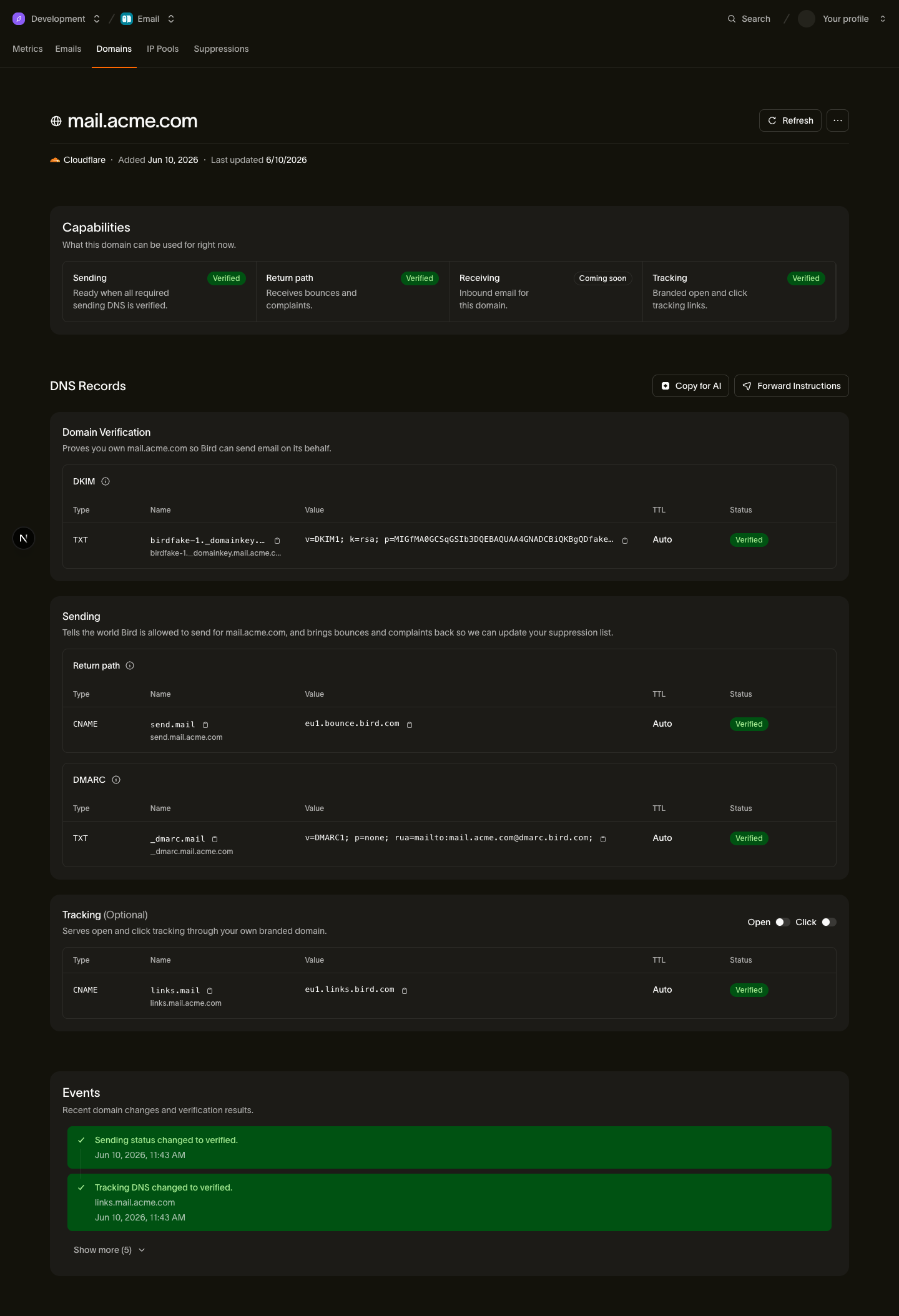
Before you start, open your domain's detail page in the Bird dashboard and keep it visible. Copy each host and value from that page.
Find the DNS editor
- Sign in to the DigitalOcean control panel.
- Select Networking > Domains.
- Select your domain in the list. The records page includes a Create new record form.
The form has a row of tabs for the record type: A, AAAA, CNAME, TXT, and so on. Start each Bird record by selecting its type.
Add the records
The Hostname field is relative to your domain: enter only the part before your domain name. DigitalOcean appends the domain for you.
DKIM (TXT)
- Select the TXT tab in the Create new record form.
- Hostname: paste the DKIM host from Bird, but remove your domain from the end: for
example.comyou enter<selector>._domainkey. - Value: paste the DKIM value exactly as shown in Bird (
v=DKIM1; k=rsa; p=...). If DigitalOcean's field won't accept it as one string, use the DNS record splitter to break it into quoted chunks first. - Click Create Record.
Return-path (CNAME)
- Select the CNAME tab.
- Hostname:
send(or whatever subdomain your Bird dashboard shows before your domain name). - Is an alias of: paste the value from Bird, for example
<region>.bounce.bird.com. - Click Create Record.
Tracking (CNAME, optional)
This optional record enables branded open and click tracking. Your domain can verify and send without it.
- Select the CNAME tab.
- Hostname:
links(or the subdomain shown in Bird). - Is an alias of: paste the value from Bird, for example
<region>.links.bird.com. - Click Create Record.
DMARC (TXT)
- Select the TXT tab.
- Hostname:
_dmarc. - Value: paste the DMARC value from Bird, for example
v=DMARC1; p=none; rua=mailto:dmarc-agg@dmarc.bird.com;. - Click Create Record. Keep an existing valid DMARC record at this domain or a parent domain.
DigitalOcean gotchas
- Hostnames are relative. DigitalOcean appends your domain to the Hostname field automatically: entering
send.example.comcreatessend.example.com.example.com. Type onlysend. - The trailing dot is normal. After you save a CNAME, the records list shows the target with a trailing dot (
<region>.bounce.bird.com.). That is standard fully-qualified DNS notation, so keep it. - Records here only work on DigitalOcean's name servers. The domain must be delegated to
ns1.digitalocean.com,ns2.digitalocean.com, andns3.digitalocean.comat your registrar. If the name servers point elsewhere, add the records at the authoritative DNS provider instead.
After you publish
Bird checks your DNS automatically. You can also open the domain details in the dashboard and select Refresh. If the domain remains pending, see Verification delays.
Next steps
- Sending domains: adding and managing domains end to end
- DKIM, SPF & DMARC: what each record proves and why Bird does not publish an apex SPF record
- Verification delays: what to check when a domain stays pending
Related resources
Continue with the documentation, guides and examples for this topic.