List hygiene
List quality affects deliverability. Hard bounces indicate invalid or stale addresses, while spam complaints indicate unwanted mail. Sustained high rates can lead mailbox providers to filter or throttle your messages.
What is handled for you
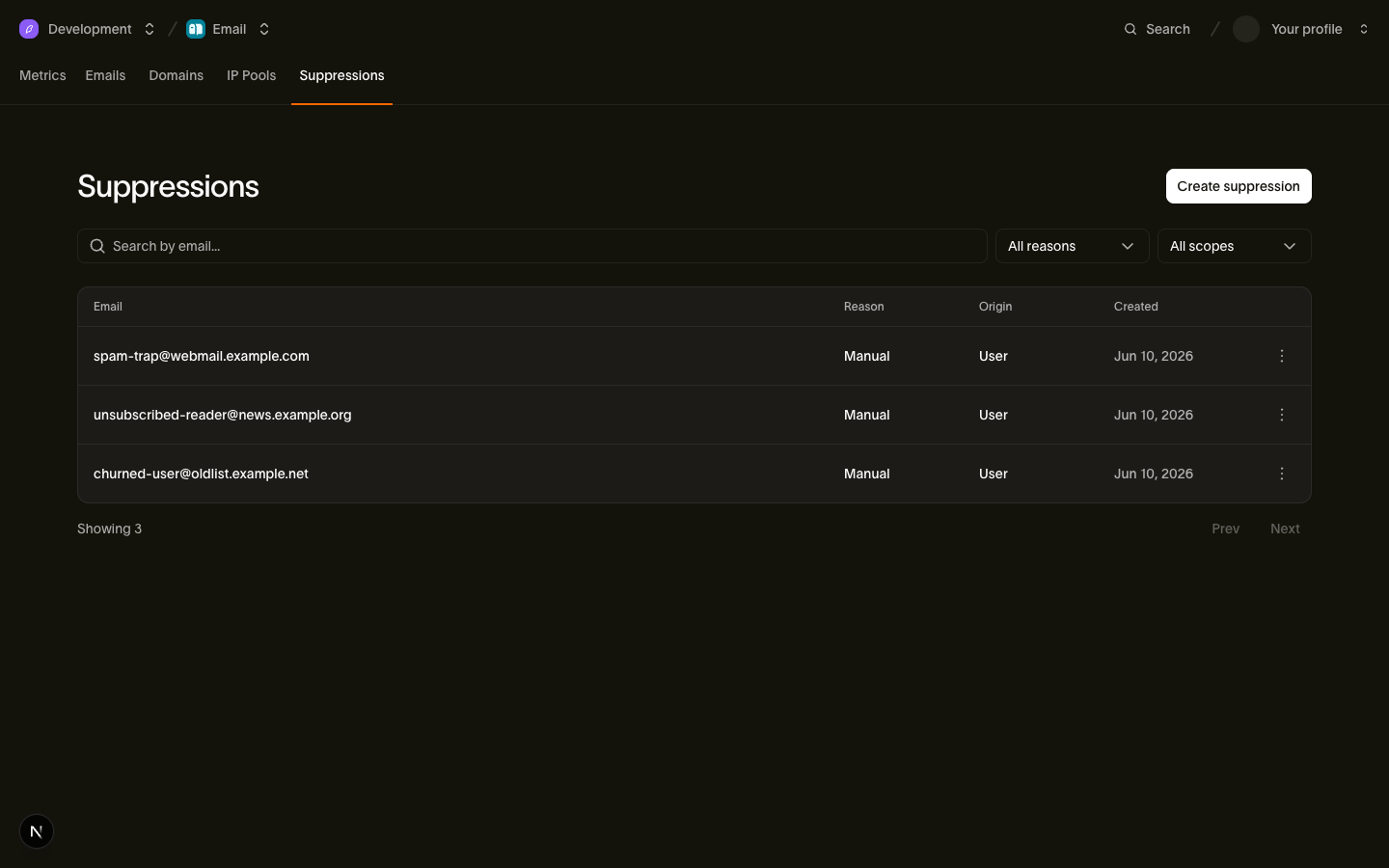
Bird automatically adds hard bounces and spam complaints to the workspace suppression list. Future sends to those addresses are blocked. Unsubscribes also block future marketing mail.
Suppressed recipients appear as rejected with a reason. Manage the list on the Suppressions page, or see the suppressions guide.
What you should do yourself
Automatic suppression catches the addresses that have already gone bad. The part you have to do yourself is removing recipients who are quietly losing interest:
- Send only to people who opted in. Purchased, scraped, or very old lists are where bounces and complaints come from. If someone didn't ask for your mail, don't send it.
- Honor unsubscribes immediately. Bird blocks future marketing sends to unsubscribed recipients. Keep other systems in sync so importing an old list does not restore opted-out addresses.
- Prune chronically unengaged recipients. Use durable engagement signals such as clicks, replies, or purchases instead of opens alone. Run a re-engagement campaign, then stop mailing recipients who remain inactive.
- Review your suppression list periodically. It tells you where your data is going stale. A steady stream of hard bounces from one signup source, for example, points to a form that needs validation or confirmation.
A simple routine
- Before any large send, ask where each segment of the list came from and when those people last engaged.
- After the send, check your bounce and complaint rates on the Metrics page. Sender reputation monitoring says what good looks like.
- Define an inactivity cutoff that fits your sending cadence, run one re-engagement campaign, and remove recipients who remain inactive.
Next steps
- Sender reputation monitoring: the bounce and complaint thresholds to watch
- Suppressions: the full technical contract for the suppression list
Related resources
Continue with the documentation, guides and examples for this topic.