
Key Takeaways
- Marketing budgets are tightening, forcing teams to prioritize cost-efficient channels
- Consumers are more selective and expect personalized, meaningful interactions
- Messaging is becoming a core communication channel between brands and customers
- Customers frequently switch between SMS, email, social apps, and calls
- Companies struggle to build a unified customer view across all channels
- Third-party cookies are disappearing, pushing marketers toward owned channels
- Privacy changes from Apple and Android reduce tracking accuracy
- Conversational marketing is becoming essential for engagement and retention
Introduction
We’re entering 2023, and still change is the only constant.
Changes in customer expectations, the need to tighten belts, and the “death” of cookies all impact how you market to your customers.
To help you plan your marketing efforts in context and navigate the current economic environment, we’ve laid out the consumer and marketing macro trends for 2023. Making sure that your brand can navigate the new terrain — and reach all its targets.
Marketing and advertising budgets are getting tighter—and more strategic
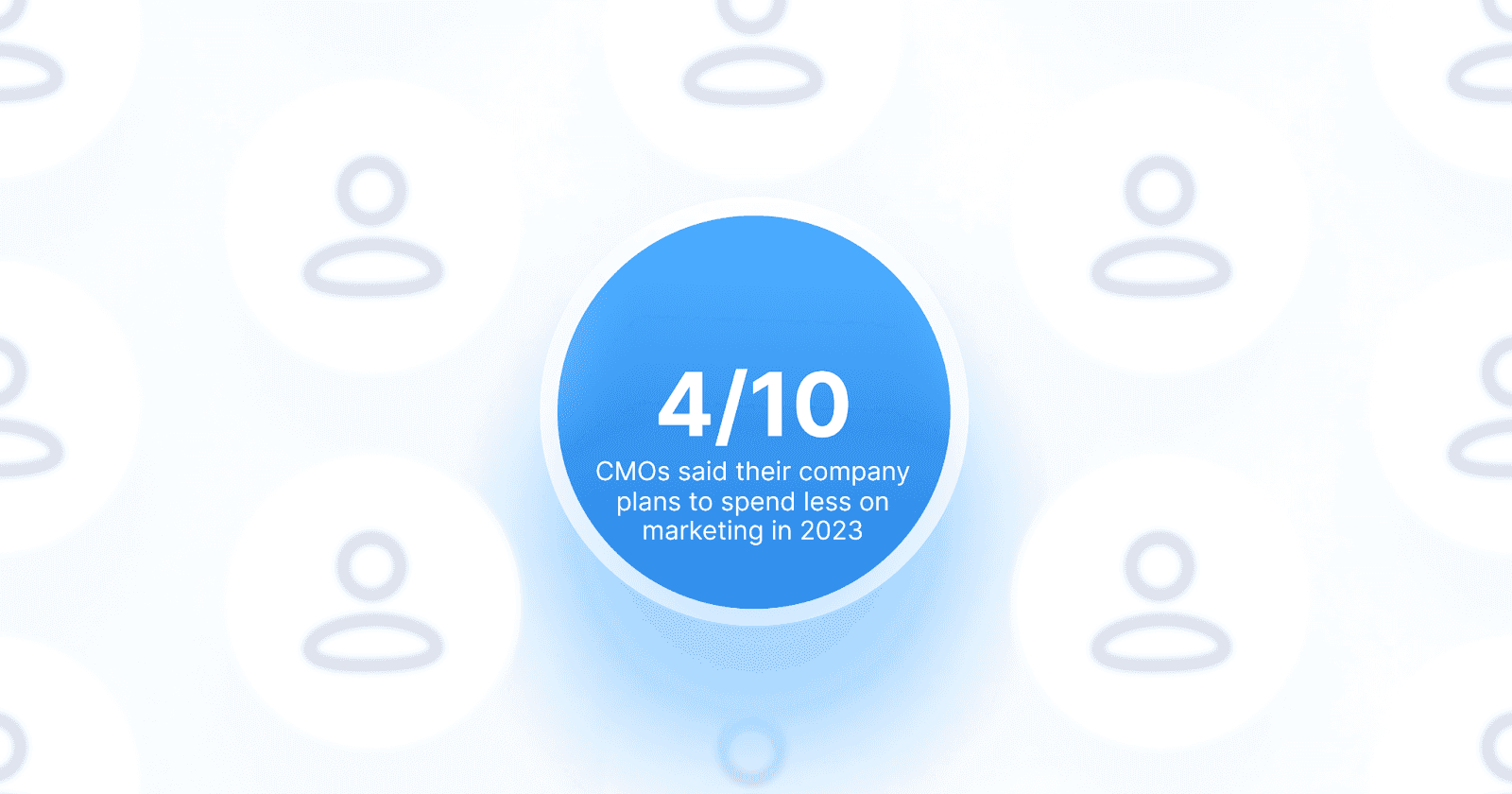
The combined effect of inflation and the rumored recession have caused many companies to reduce their budgets in 2023: 4 out of 10 CMOs said their company plans to spend less on marketing in 2023.
At the same time, nearly the same number of marketing leaders have added social channels to sell their products and services—and 65% have increased the number of channels they rely on.
In other words: marketers are experimenting with experimenting with new channels to find out what will have the biggest impact on engagement in 2023—and what will give them the biggest bang for their buck.
Consumers are increasingly selective about the brands they engage with
Two (plus) years of constant digital bombardment has caused an immense amount of burnout for consumers. They've tuned out advertising and email blasts — opting for more personalized experiences and always-on support whenever and wherever they are in the world.
Yet irrelevant ads continue to spread across platforms, watching an ad before being able to read an article or stream a video has become the norm— further aggravating the ad fatigue.
Take this stat, for example: the average mobile user sees 30 ads per day on Facebook alone.
With some much noise, how can brands have their moment of quality engagement?
By listening to what consumers want.
Consumers are looking for personal interaction
81% of consumers want brands to understand them better and know when and when not to approach them. They want to feel like they are talking to someone they know, with 3 out of 4 adults looking for business messaging to replicate personal interactions.
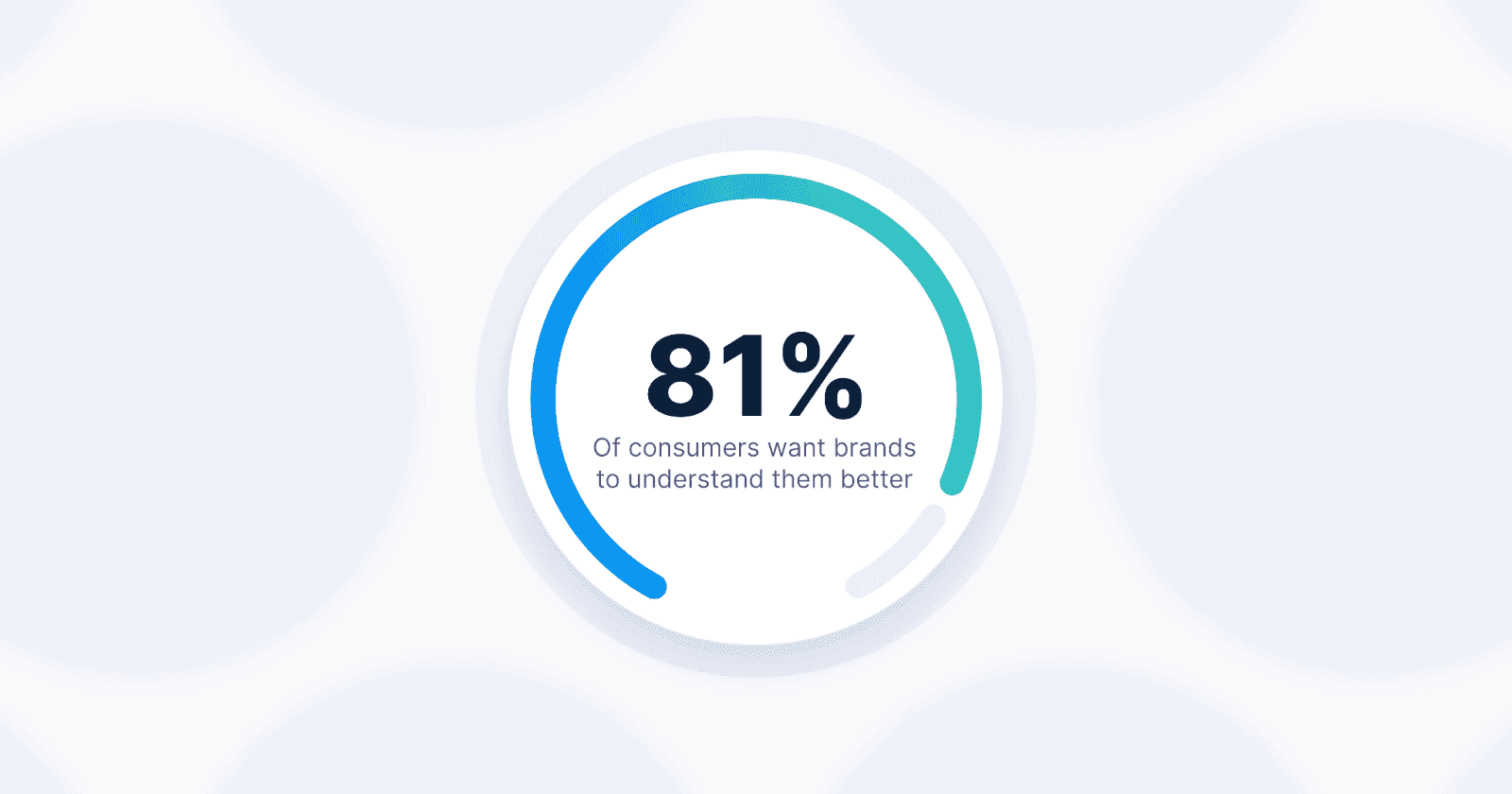
81% of consumers want brands to understand them better and know when and when not to approach them.
In the era of Amazon, Netflix, and Spotify, personalization has become a baseline expectation, rather than a “nice-to-have.”
Messaging helps people build trust and feel more connected to businesses, 75% of adults want to message businesses the same way they do people.
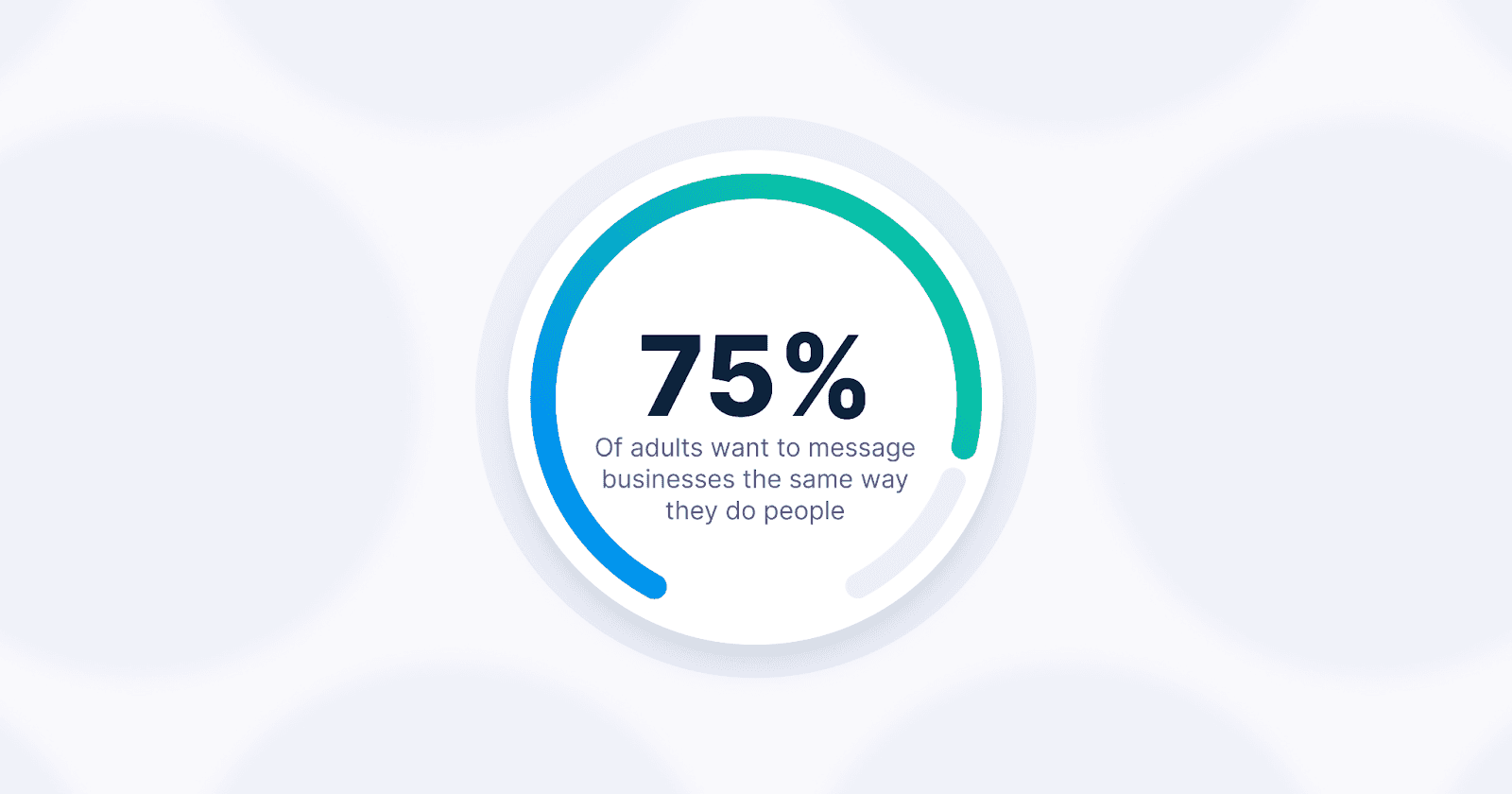
Source: The Harris Poll September 2020 online survey of the U.S., Germany, the UK, India, Mexico, Brazil and Indonesia to understand their thoughts about business messaging. The survey was commissioned by Facebook and conducted among 8,214 adults ages 18 and older and specific brands and products were not mentioned, including WhatsApp.
57% of consumers say that messaging a business (e.g., via a chat app, text, or social media) feels more personal than calling.
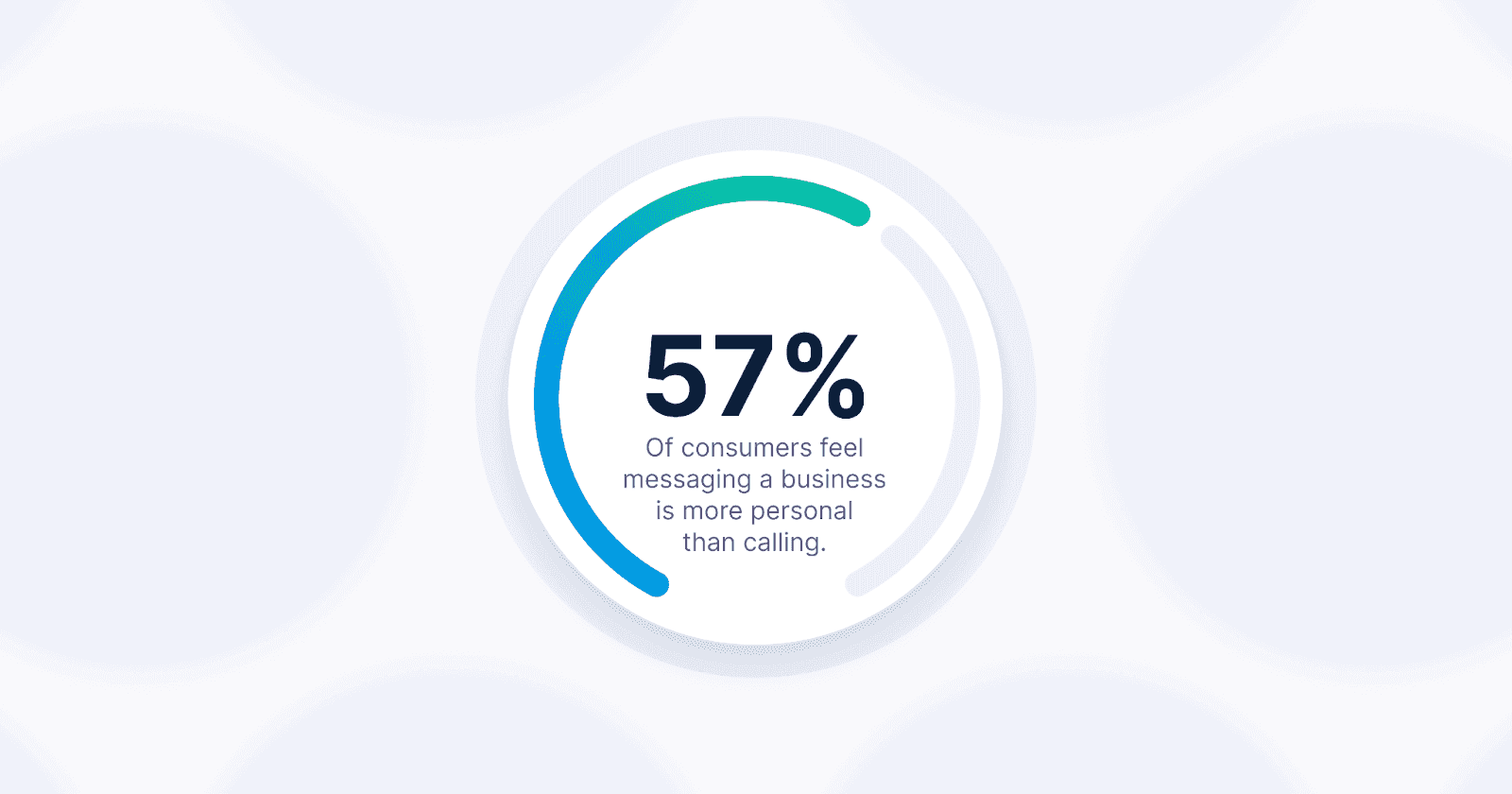
Source: The Harris Poll September 2020 online survey of the U.S., Germany, the UK, India,Mexico, Brazil and Indonesia to understand their thoughts about business messaging. The survey was commissioned by Facebook and conducted among 8,214 adults ages 18 and older and specific brands and products were not mentioned, including WhatsApp.
If this personal interaction is lacking in your marketing plan, then you could be leaving money on the table. Messaging offers a wealth of untapped potential to build stronger personal connections — in turn increasing conversions and returning customers. It also increases opportunities to find out more about your consumers to further personalize the experience.
And gathering data is a real challenge, research from BCG shows. While data-driven marketing can double revenue and increase cost savings by 1.6 times, only about 30% of companies are creating a single customer view across channels, and just 1% to 2% are using data to deliver a full cross-channel experience for their customers.
And, to achieve this personal level of interaction, you need to consider just how accessible your business is.
Consumers are messaging businesses
In one minute, a person can order dinner from an app, send text messages to three different people, and check the weather. Why wouldn't they expect to be able to get help from your business just as easily?
In 2021, around 16 billion mobile phones were operating worldwide, allowing people to connect with anyone from anywhere in the world, at any time. As a result, consumer expectations for efficient communication have skyrocketed. People are gravitating to platforms like Whatsapp, Messenger, Instagram, and WeChat with billions of monly active users across the world. And it’s not just family and friends that people want to connect with — it’s businesses too.
Conversations are happening in the palm of our hands every day. But what do consumers want to message businesses about?
| Topic | Percentage of Consumers |
|---|---|
| Message businesses to ask about products or services | 81% |
| Message businesses to make a purchase | 74% |
| Message businesses to get support | 75% |
- Over 81% message businesses to ask about products or services.
- Over 74% message businesses to make a purchase.
- Over 75% message businesses to get support.
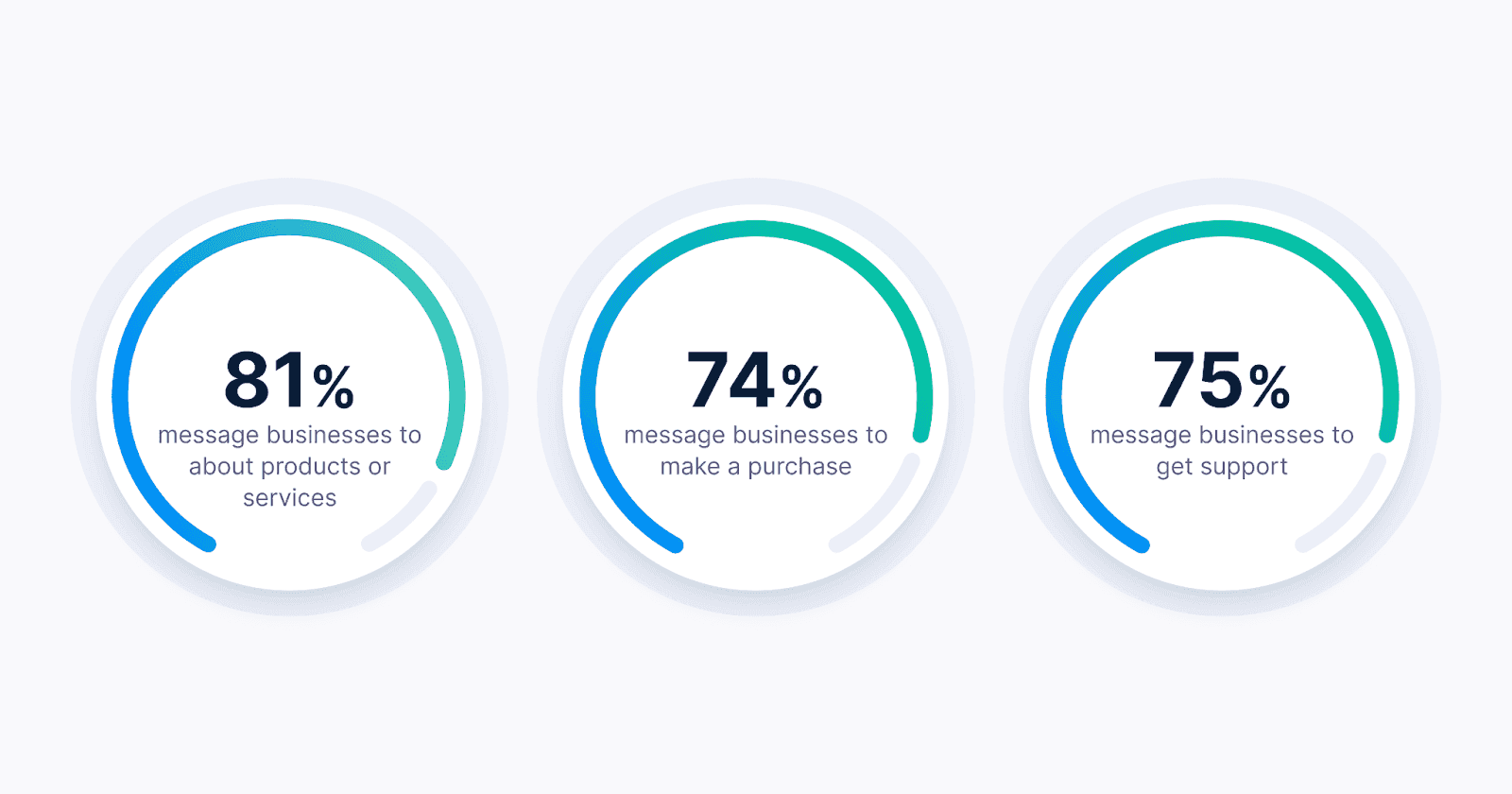
Facebook IQ source: “Motivations, Mindsets and Emotional Experiences in Messaging (vs. Feed)” by Sentient Decision Science (Facebook commissioned survey of 8,156 people in BR, GB, IN, and the US), Jun 2018. Research refers to people surveyed who use a messaging app daily and have messaged a business in the past three months using one of their most commonly used apps.
That's why it's critical hat businesses develop a conversational marketing and customer engagement strategy. The businesses that don’t find a way to connect with people via a scaled messaging solution risk being left out during this transformational shift; and it’s undeniable shift to messaging is happening. So much so that Gartner predicted that by 2022, 70% of all customer interactions would involve emerging tools like chatbots and messaging.
Consumers move between channels
Alongside the use of more personal platforms for communication with businesses, the tendency to move between different channels also highlights a massive marketing opportunity. Your customers might contact you via SMS messaging, before switching to email to send you a document, and finally jumping on a call with your customer services team.
Customers want to be able to contact businesses easily, in any way that is convenient for the customer and in a timeframe that works for the customer. All this makes it challenging for teams to stay on top of information coming in from multiple channels. According to BCG, only around 30% of companies are creating a single customer view across their communication channels.
Marrying consumer data with channel interactions is a difficult technical challenge, but one that needs to be addressed to enable true personalization. As such we are expecting more businesses exploring the options for scalable customers data platforms.
The death of cookies
We’ve become used to 3rd party cookies on websites, and their ability to allow advertisers to send personalized ads off-site. But the era of such tracking is coming to an end.
Google and Safari which together constitute almost 83% of global browser market share have announced they would be ditching third-party cookies effectively putting an end to the practice. Google Crhome, the larger of the two already shared they wouldn’t be replacing cookies with an alternative tracking system.
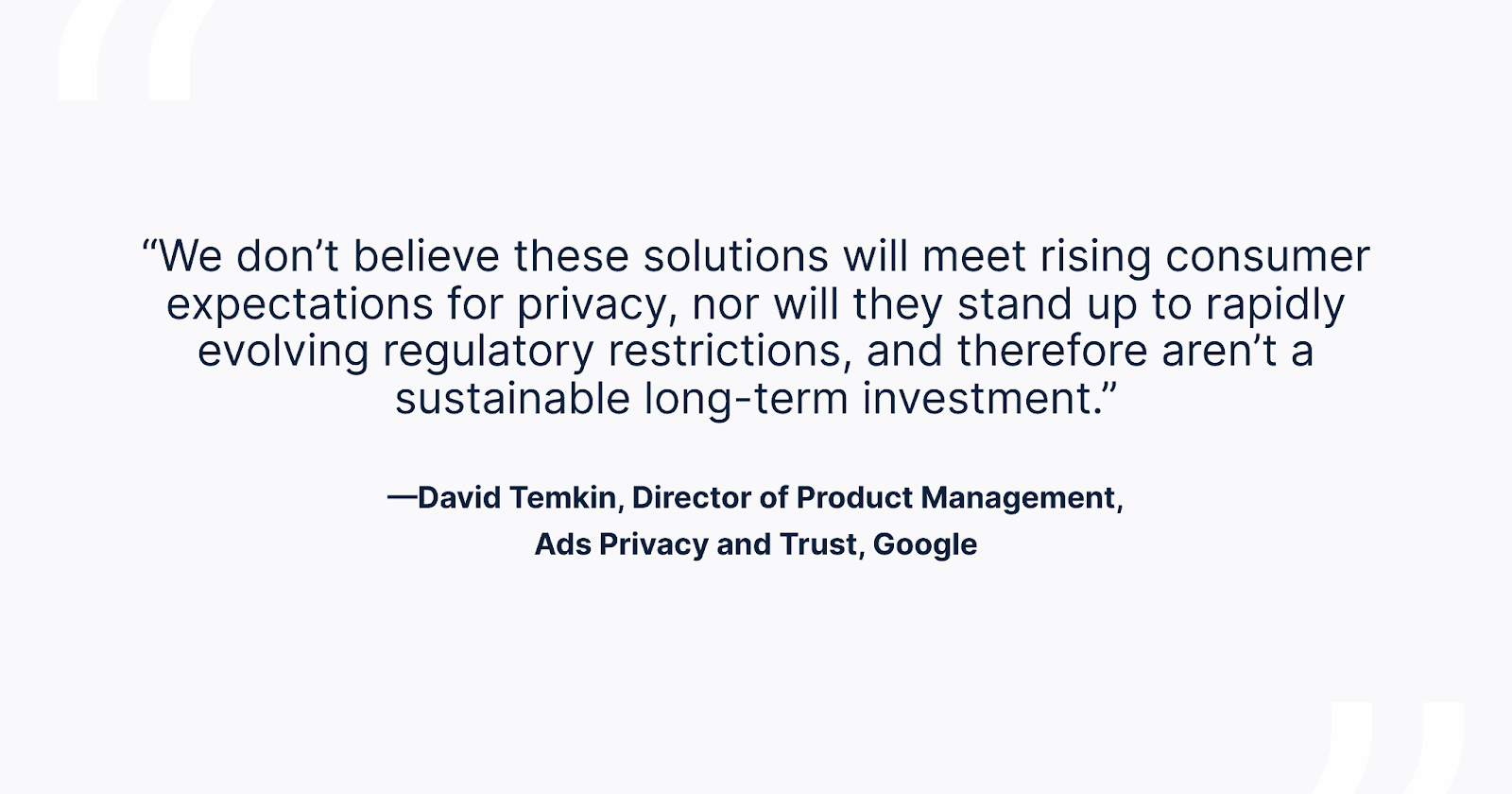
Going forward, businesses will have to resort to unpersonalized ads and blended campaign performance to identify which campaign drove their conversions.
When GettApp surveyed marketers on Google’s plans, they found that 44% of them were predicting an increase of 5-25% in spending in order to reach the same goals as in 2021.
Privacy-conscious ripple effects make tracking less effective
We’re entering a new era of privacy.
Apple and Android's 2020 updates to data privacy regulations have given consumers more transparency and control over their personal information. These changes included:
1. All apps must submit information about their app’s data collection practices via Apple’s App Store Connect.
2. All App Store Apps must ask users for permission to track them across third-party apps and websites through Apple’s App Tracking Transparency framework (aka: ATT or prompt).
3. All platforms must use a new framework that restricts, aggregates, and delays event reporting.
The updates have significantly impacted how businesses track user behavior.
It’s no wonder that marketers are starting to explore alternative channels.
Which leads us to another trend: changes in budget and spending.
The light at the end of the tunnel
While we are seeing a lot of uncertainty on the horizon, it’s also important to recognize the positive aspects of change.
Yes we will have to reduce budgets, but it will also force us to cut wasteful spending.
No, we won’t be able to stalk customers around the web with cheap ads any longer. But it shouldn't matter, because businesses who compete on experiences will still always able to capture the attention of loyal customers who care about what they have to say.
So, are you looking for a type of marketing that puts customers first and helps build resilience in the face of uncertainty - then keep on reading to learn more about Conversational Marketing.
As always, feel free to reach out if you have any questions or if you are looking for help setting up your use-case.
Q&A
Why are marketing budgets getting tighter?
Inflation and recession concerns are pushing companies to cut costs, forcing marketers to become more strategic with fewer resources.
What are consumers expecting from brands now?
Personal, timely, and relevant interactions that feel human — not generic broadcasts or interruptive ads.
Why is messaging becoming so important?
People prefer chatting with businesses the same way they talk to friends — quick, convenient, and always available.
What do consumers most commonly message businesses about?
Product questions, making purchases, and getting support.
Why is cross-channel engagement hard for brands?
Customer data lives in different systems, and most companies don’t have a unified view of the customer journey.
How does the death of third-party cookies affect marketing?
Businesses lose the ability to deliver hyper-targeted ads across the web and must rely more on owned data.
How have privacy changes impacted tracking?
Apple’s App Tracking Transparency and Android updates limit data access, delay event reporting, and reduce attribution accuracy.
What’s the key takeaway for the future?
Brands that focus on personalized, conversational, customer-first marketing will stay resilient despite economic or privacy shifts.